
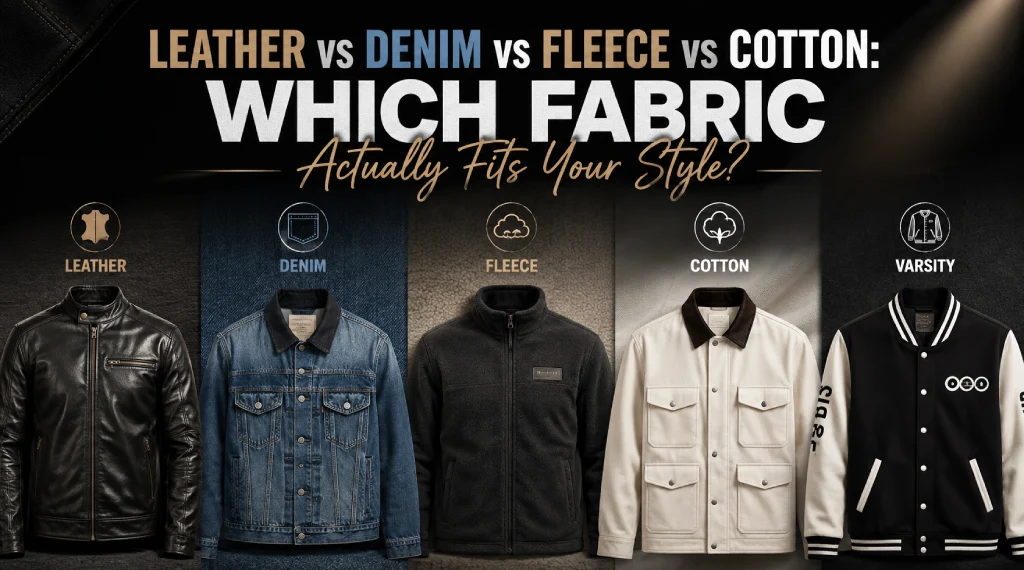
Pick the wrong fabric and your outfit falls flat, no matter how good the cut is. Leather gives you that bold, structured look. Denim feels familiar and easy. Fleece is all about comfort and warmth. And cotton? It just works, almost everywhere. But here’s the thing: fabric choice goes way beyond looks. Weight, texture, finish, breathability, and structure all quietly shape how an outfit comes together. So in this guide, we’ll break down leather, denim, fleece, and cotton, plus touch on suede, wool, satin, and polyester. So you can figure out what actually suits your season, your occasion, and honestly, your lifestyle.
Why the Right Fabric Can Transform Your Entire Outfit
Fabric is usually the first thing that sets the tone of an outfit, even before you think about shoes or accessories. Texture alone can turn the same jacket shape into something rugged, refined, sporty, or laid-back. Take a smooth leather jacket, for instance. It instantly looks structured. Swap that for soft fleece, though, and the whole vibe shifts toward casual.
Weight matters too. Heavier fabrics are heavier and bulkier, while lighter fabrics let you move freely and layer without feeling weighed down. Then there’s finish. Matte tends to look low-key, while anything glossy or polished naturally draws the eye.
Season should guide your pick as well. Wool and fleece handle cold weather because they trap heat. Cotton and lightweight denim breathe better, so they’re solid picks when it’s mild out. Leather can block wind and add structure, though how warm it actually feels depends a lot on the lining underneath.
And don’t forget Occasion. A leather jacket can carry an evening look just fine, while denim leans toward everyday, relaxed dressing. Cotton floats between casual and smart-casual pretty easily, and polyester naturally pairs with anything sporty or performance-driven.
So really, picking the right fabric comes down to more than appearance. Think about comfort, climate, weight, durability, versatility, and of course your own taste before settling on anything.
Leather Styling Ideas: From Everyday Layers to Statement Looks
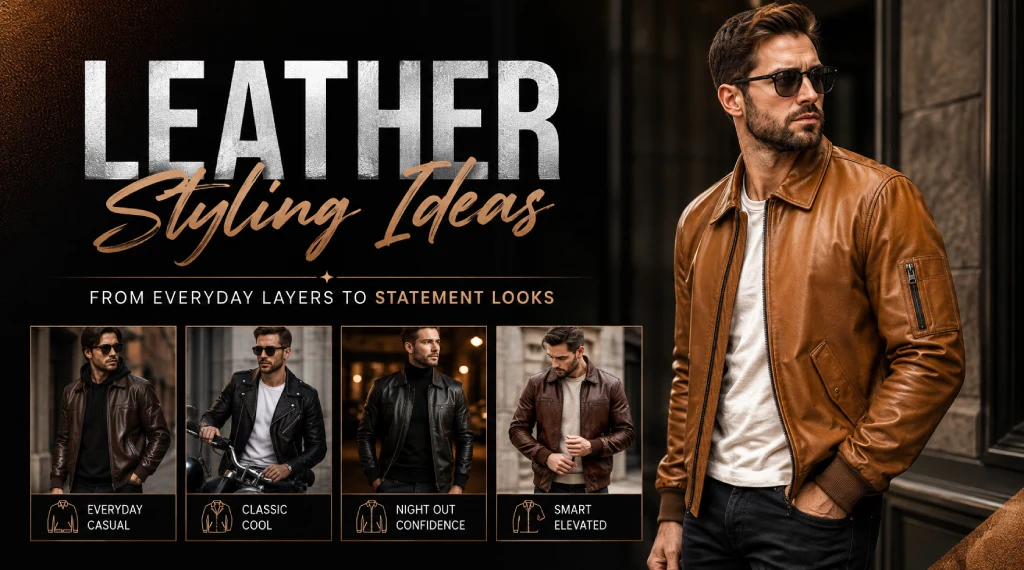
Leather has a look all its own, structured, textured, with either a polished shine or a matte finish. It sharpens up an outfit without you needing to overthink the layering. That said, the exact effect depends on the cut, the leather’s finish, the color, and the overall silhouette.
A leather jacket looks great over a plain tee, straight jeans, and sneakers for something casual. Want it dressier? Swap the tee for a fitted shirt and pair it with tailored trousers. Add Chelsea boots or clean lace-ups, and suddenly you’ve got an evening-ready look.
A leather vest works nicely over knitwear or shirts, giving you that leather texture without full jacket coverage. A leather coat, meanwhile, creates a longer, more structured silhouette; pair it with trousers, boots, and simple knits.
If you’re going for something formal, a leather suit needs restraint elsewhere. Keep the shirt and shoes simple since the material already does the talking. A leather bomber, though, is more flexible; it slides easily from streetwear to a cleaner evening outfit depending on what’s underneath.
Monochrome leather is another route worth trying. Black leather with black trousers gives you a streamlined look, while brown leather against darker neutrals feels softer. Just be careful. An all-leather outfit can start to feel heavy pretty fast.
That’s why balance matters. Mix in knitwear, cotton tees, brushed fabrics, or lightweight trousers to soften things up. You’re not trying to hide leather’s boldness, just give it better proportion.
Styling a Leather Bomber for Different Occasions
A leather bomber slots into a bunch of everyday outfits without much effort. For daytime, throw it over a basic tee, straight jeans, and sneakers; it’s simple, and the jacket stays the focus.
When it’s colder, or you want something sharper, try a fine-knit sweater underneath and pair the bomber with tailored trousers. Boots sharpen the finish; minimal sneakers keep things relaxed instead.
As for accessories, keep them minimal. A simple watch or a compact bag usually does the job. Since the bomber already brings texture and structure, piling on extras just makes the whole thing look busy.
Denim Outfit Ideas for Effortless Everyday Style
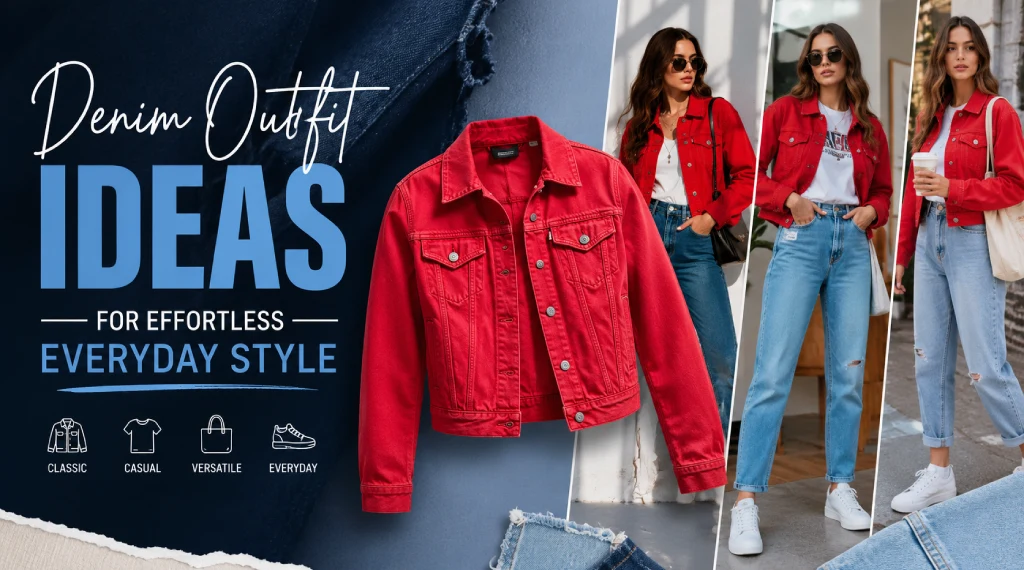
Denim might be the most adaptable outerwear fabric out there. Its structured weave holds shape well, and honestly, its familiar texture makes it easy to throw into almost any outfit.
A denim jacket pairs naturally with tees, hoodies, sweaters, chinos, cargos, or straight trousers. A denim vest layers well over a tee in mild weather, or over knitwear when you need a bit more warmth. Denim coats give you more coverage while keeping that same casual feel.
You can also use a denim shirt or overshirt as a light outer layer. Leave it open over a basic tee, or button it over a thin base layer. Either way, it’s an easy way to layer without adding much bulk.
Color changes the whole vibe, too. Light-wash denim feels relaxed, while dark-wash looks cleaner and more polished. That distinction matters when you’re picking denim for different occasions.
Double-denim can work, but only if the shades contrast enough. A light denim jacket over dark jeans reads clearly; two nearly identical washes just blend together. Keep everything else simple so the combo doesn’t feel repetitive.
You can also dress denim up. Swap sneakers for boots or loafers, add a button-down, or pair a denim vest with a structured blazer. Small tweaks like these push denim from basic casual toward smart-casual territory.
At the end of the day, denim’s biggest strength is versatility. It fits into nearly any casual wardrobe without demanding much extra coordination.
Fleece Layers That Make Casual Outfits Feel More Comfortable
Fleece is warm and cozy and gives you that casual outdoorsy vibe. The texture is great for casual outfits, so it is more of a layering piece for everyday than formal. A fleece jacket goes well with jeans, cargos, joggers, or relaxed trousers. A fleece vest keeps your torso warm while leaving your arms free. Pullovers work as a simple standalone layer, and zip fleeces let you adjust coverage on the fly.
Layering is really where fleece shines. A hoodie underneath a fleece jacket makes a solid cold-weather combo; just be mindful of bulk when stacking oversized pieces together.
Fleece can be combined with cargos, hiking shoes or functional accessories for an outdoorsy look. For everyday wear, keep it simple with denim, sneakers, and a basic tee or hoodie.
Proportion matters more with thicker fleece. If your top layer has real volume, go for slimmer or straight-leg bottoms to balance things out. Lighter fleece also works well as a mid-layer tucked under a bigger jacket.
Bottom line: fleece is your go-to when comfort, warmth, and relaxed styling top the priority list.
Cotton Styling: Lightweight Looks From Casual to Tailored
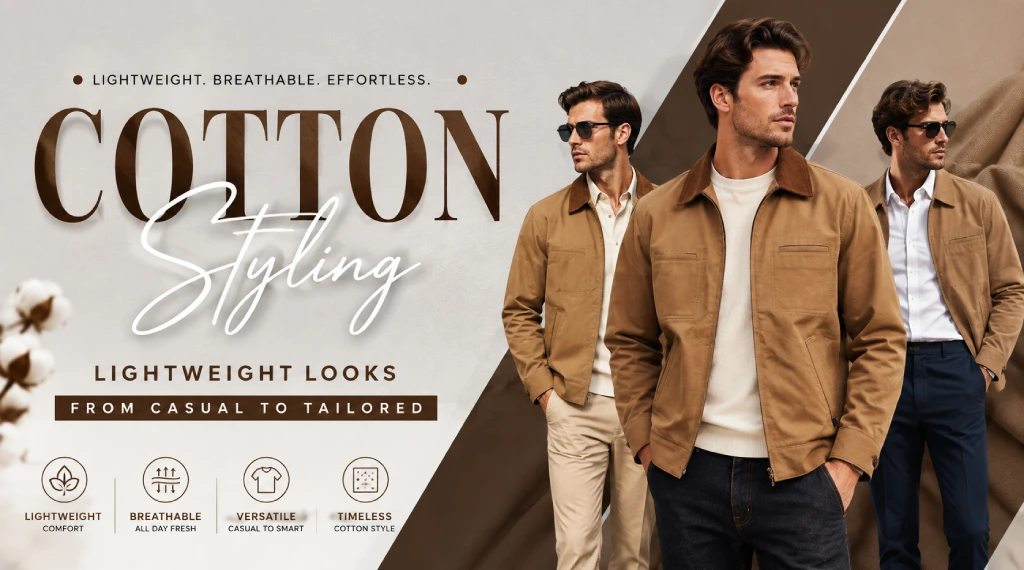
Cotton might be the most flexible fabric around, since it can look relaxed or structured depending on weight, weave, and how the garment’s built.
A cotton jacket pairs easily with tees, chinos, denim, or casual trousers. Cotton vests give you lightweight layering, and cotton coats offer a cleaner silhouette for those in-between seasons. An overshirt sits between a shirt and a jacket, which makes it handy for mild weather.
Cotton really earns its keep in warm weather. Lightweight cotton lets air through and often feels more comfortable than heavier outerwear once temperatures climb. Stick with neutral or lighter tones and simple silhouettes to keep that relaxed seasonal feel going.
It also works for smart-casual dressing. A structured cotton jacket, a button-down, and tailored trousers instantly look more polished than a tee-and-denim combo. On the flip side, an oversized cotton overshirt with jeans or cargos keeps things casual.
Since cotton adapts so easily, it’s a smart pick when one wardrobe needs to cover a lot of ground. That said, it’s not automatically the warmest or most weather-resistant option; performance really comes down to fabric weight, weave, and how you layer it.
Styling a Cotton Varsity Jacket for a Modern Look
A cotton varsity jacket works naturally with a basic tee, straight denim, and sneakers. This combo keeps that classic varsity silhouette casual, no extra layers needed.
For something sportier, wear it over a hoodie with cargos and low-profile sneakers. Want a bit more polish? Swap the cargos for tailored trousers instead.
Keep the color palette in check. A neutral varsity jacket lets your shirt or shoes do the heavy lifting in terms of contrast, while a striking jacket color goes better with simple basics.
Suede Styling for Soft Texture and Elevated Casual Looks
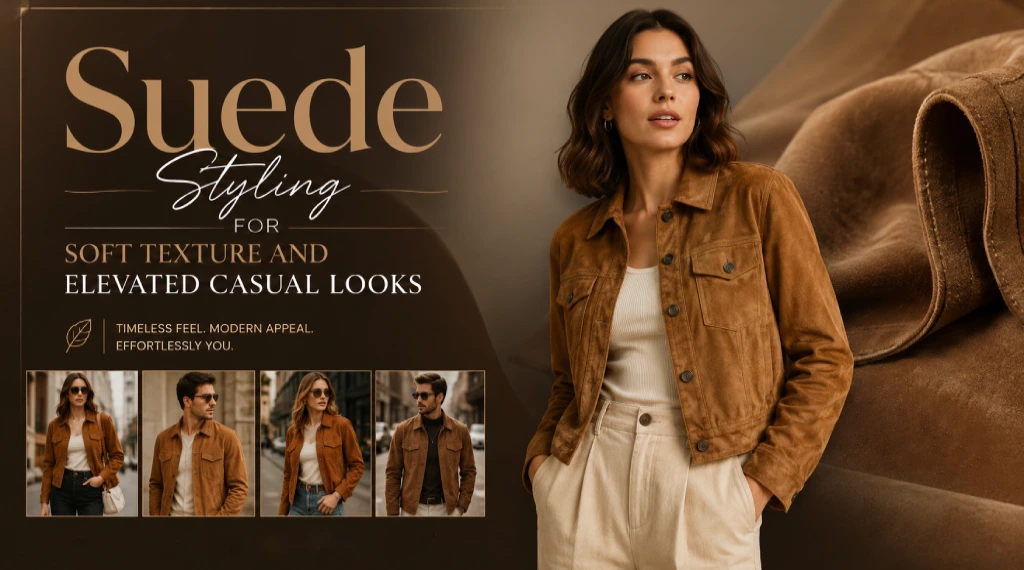
Suede offers a softer take on traditional leather. Its brushed finish gives it texture without the sharp shine you get from polished leather. That’s what makes it work so well for both casual and smart-casual outfits.
Wear your suede jacket over knitwear, button-downs, denim or tailored trousers. Suede vests give you a lighter layering option, while suede coats add a more structured look. Blazer-style suede pieces can even step in where a regular blazer would normally go.
Neutral, earthy tones suit the material naturally; think brown, tan, beige, charcoal, or muted olive. These colors let the texture stand out without overwhelming the rest of the outfit.
Footwear can shift the whole direction. Boots keep things traditional, loafers lean smart-casual, and minimal sneakers relax the look even further.
Suede works especially well when you want texture without piling on contrast. Its softer surface feels right in between casual everyday and something more refined.
One thing to keep in mind is that suede needs a more delicate touch than rugged cotton or denim, especially when dealing with moisture and stains. So weigh appearance against maintenance before you commit.
Wool Styling for Classic Cold-Weather Dressing
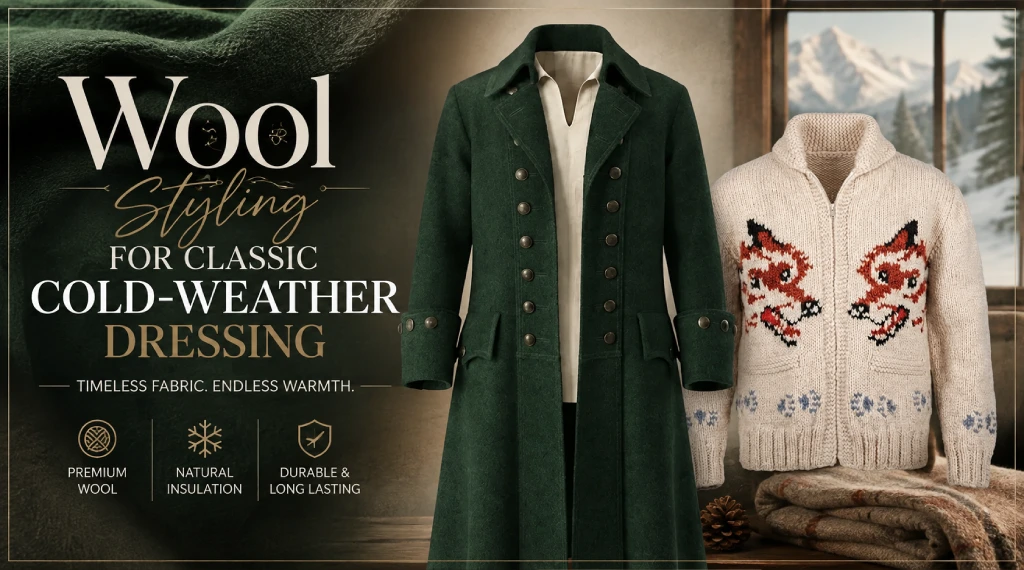
Wool is practically synonymous with structured cold-weather clothing, mixing insulation with a genuinely refined look. Its range stretches from traditional coats all the way to relaxed modern layers.
A wool coat pairs beautifully with sweaters, turtlenecks, tailored trousers, and boots for a classic winter outfit. Wool blazers suit shirts and trousers in formal or smart-casual settings, wool suits bring a traditional structured look, and wool vests add warmth without needing a full heavy outer layer.
The color and the construction of the wool will influence the formality. Darker hues and sharp tailoring make it more formal, softer colors and easy-going cutting give it a more relaxed feel. Layering needs some thought here, since wool already carries visual weight on its own. A structured wool coat over a thick sweater can look bulky fast if the proportions aren’t balanced. Lightweight knitwear underneath keeps you warm without adding that bulk.
Boots suit relaxed winter looks, while dress shoes fit formal wool tailoring better. Really, the occasion should guide the choice, not just the fabric itself.
Wool earns its place when warmth and traditional styling need to work hand in hand.
Satin Styling for Smooth, Statement-Making Outfits
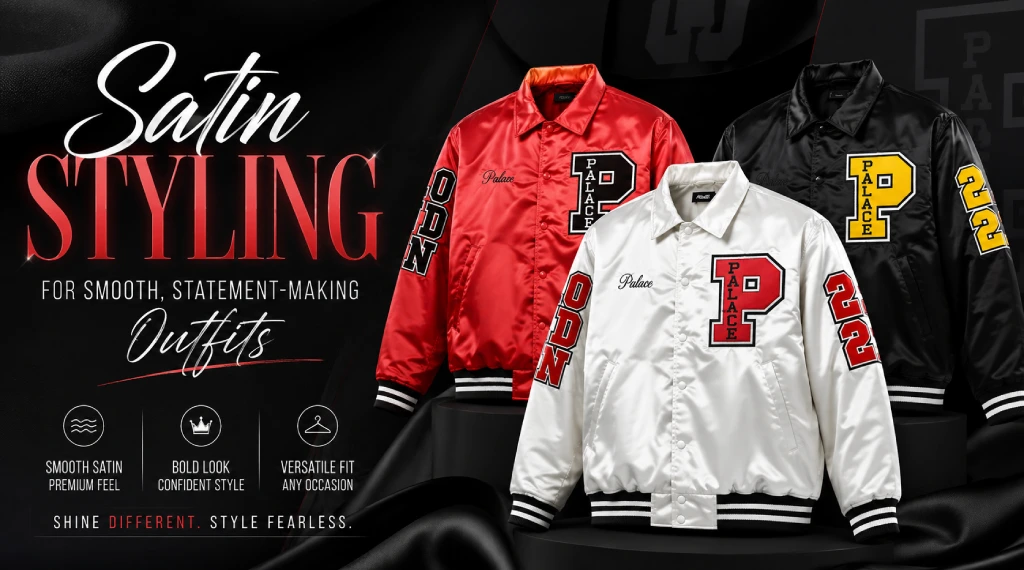
Satin stands out because of its smooth, reflective surface. That sheen instantly gives satin pieces more presence than matte fabrics like cotton, denim, or fleece.
A satin bomber can become the centerpiece of an outfit when you pair it with understated trousers and a plain tee. Satin varsity-style pieces work similarly, especially when everything else stays visually restrained.
Satin shirts pair nicely with tailored trousers or clean denim. Sometimes satin shows up as a detail within more formal pieces, too, where it becomes an accent rather than the main event.
Generally, this fabric suits evening events, parties, and fashion-forward moments — occasions where a bolder statement feels appropriate. Just don’t stack too many glossy pieces together, or the contrast gets overwhelming.
Matte fabrics help balance things out. Cotton, wool, and denim all tone down satin’s intensity while still letting the shine come through.
So the real styling trick here is contrast: let satin bring the shine, then keep everything else simple around it.
Polyester Styling for Sporty, Functional Looks
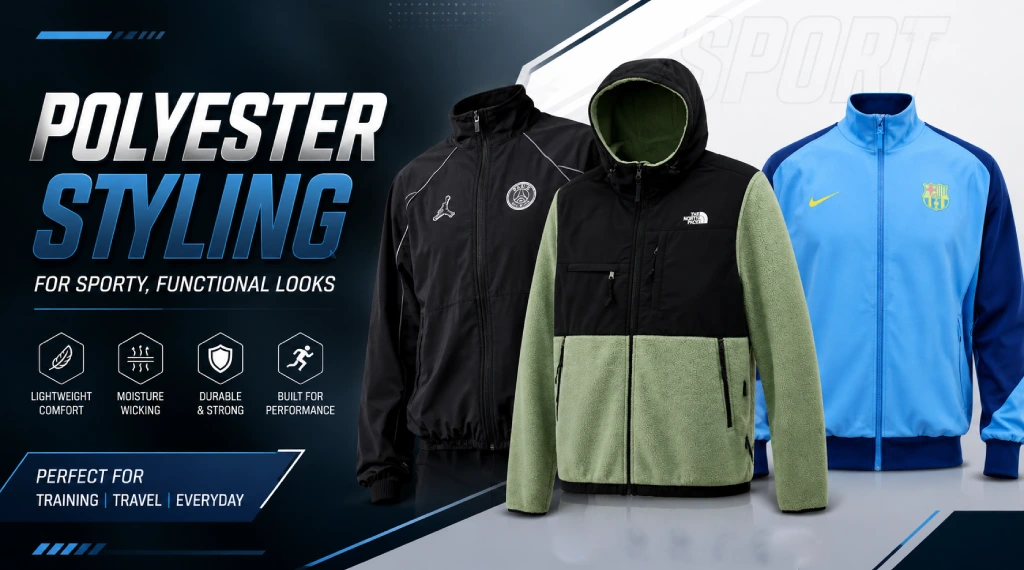
Polyester shows up constantly in performance wear and everyday sportswear because it’s lightweight, low-maintenance, and built for movement. Its overall vibe leans more technical than something like wool or leather.
A polyester bomber jacket, vest, windbreaker, or tracksuit-style layer pairs naturally with hoodies, tees, cargos, joggers, and sneakers, giving you that easy athleisure or sporty look.
For travel, polyester outerwear works well with simple base layers and functional trousers. It also fits outdoor-inspired outfits, since it’s lightweight and doesn’t restrict movement.
That said, don’t assume polyester is automatically a winter or summer fabric. Performance really depends on construction, weight, weave, and lining. A thin polyester shell and a fleece-backed polyester jacket perform very differently.
To keep technical fabrics from feeling out of place, pair them with simple pieces elsewhere. Clean sneakers, neutral trousers, and minimal accessories keep the whole outfit from tipping too far into “athletic.”
Polyester works best when function, easy care, and sporty styling are what you’re after.
How the Same Bomber or Varsity Jacket Looks Different in Different Fabrics
Here’s something interesting: the very same bomber or varsity silhouette can look completely different depending on the fabric.
- Leather gives it a structured, edgy look that works well for evening or a dressier spin on casual wear.
- Cotton keeps it light and relaxed, perfect for everyday or smart-casual combos.
- Polyester pushes the same shape toward sporty and technical, pairing naturally with joggers, cargos, and sneakers.
- Satin transforms the silhouette into a statement piece, thanks to that light-catching surface.
So shape alone doesn’t determine an outfit’s personality. The material shapes texture, visual weight, finish, and how formal (or casual) something reads.
If you’re deciding: go with leather for edge, cotton for relaxed versatility, polyester for sporty function, or satin when you want to make a statement. Ultimately, it depends on what role you want the garment to play.
How to Mix Fabrics for Better Layered Outfits
Mixing fabrics adds depth, but balance is everything here. Mixing heavy and light-weighted materials and finishes in a thoughtful way makes the outfit look intentional, not haphazard.
Leather and cotton go well together; the structured outer balances the soft base. Denim and fleece work together too; denim brings structure, fleece brings warmth and texture.
Suede pairs naturally with knitwear since both have visible texture, yet different enough surfaces to create contrast. Wool and leather can also team up for cold-weather outfits, with one supplying structure and the other insulation.
You can tone satin down with denim; the matte surface keeps satin from taking over completely. Polyester layered over cotton gives you a lightweight technical outer layer without pushing the whole look too far into sporty territory.
As a simple rule, balance heavy pieces with lighter ones. If the jacket’s thick, go lighter underneath. If one piece has strong shine or texture, keep everything nearby simple.
And try not to overdo it; leather, satin, heavy fleece, and textured wool all in one outfit create way too much visual noise. Two or three contrasting textures are usually plenty.
Which Fabric Works Best for Your Season, Occasion, and Lifestyle?
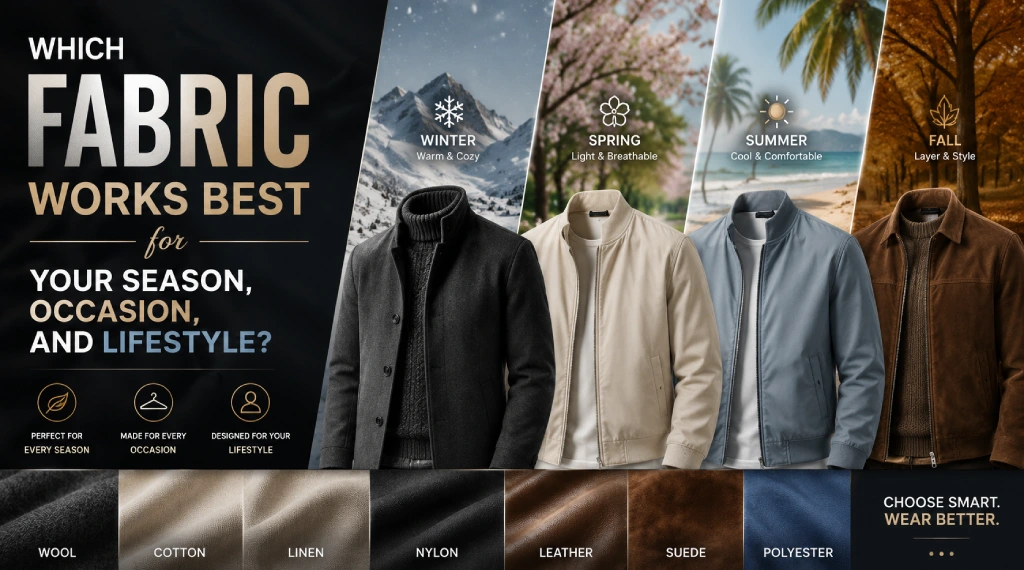
Honestly, the best fabric depends entirely on when and where you’re wearing it.
Casual Everyday Wear:
For everyday casual wear, you’ll probably reach for denim, cotton, or fleece most often. Denim gives you that structure; cotton’s just versatile enough to work anywhere. And fleece keeps things warm and comfortable when you need it.
Smart-Casual Dressing:
For smart-casual dressing, suede, cotton, and wool bring in refined texture without tipping into fully formal territory.
Cold-Weather Outfits:
When it’s cold out, wool and fleece really do the heavy lifting on insulation. Leather adds structure and helps cut the wind, especially if you’ve got the right layers underneath.
Evening and Statement Styling:
For evening or statement looks, leather and satin really steal the show: leather with its structure, satin with that shine.
Sporty and Active Outfits:
And for sporty, active days, polyester and fleece pair naturally with athletic silhouettes, hoodies, joggers, and sneakers.
Before settling on a fabric, weigh four things: weather, activity, comfort, and the look you’re going for. That approach holds up a lot better than picking something just because it’s trending right now.
Leather, Denim, Fleece, or Cotton: Finding Your Best Match
There’s no single “best” fabric for every wardrobe each one solves a different problem.
- Leather wins when it has structure, durability and an edge.
- Denim wins for casual versatility and everyday layering.
- When warmth, softness and comfort are king, fleece is the winner.
- Cotton wins for breathable, adaptable styling across casual and smart-casual settings.
So think about where you’ll actually wear the garment. If you spend most days dressed casually, denim or cotton will probably get more use. If you’re dealing with cold winters, fleece or wool makes more sense. And if you’re building out evening or statement looks, leather or satin might be your better bet.
Ultimately, the right fabric is the one that is right for your lifestyle, right for your climate, right for your comfort, and right for your personal style, not just what is trending this month.
FAQ’s
Q1: Which Fabric Is Best for Performance?
A: Polyester’s the go-to for performance wear; it’s light, easy to care for, and shows up in pretty much every activewear line out there. Throw fleece into the mix if you need extra warmth. But how it actually performs comes down to construction, design, and what you’re using it for.
Q2: What’s the Most Durable Fabric?
A: Leather holds up really well over the years, as long as it’s made right and taken care of. Denim’s no slouch either, thanks to that tightly woven structure. It’s not just the fabric that makes something durable – thickness, quality, and how well you look after it all matters too. Heavier doesn’t always mean tougher.
Q3: Which Fabric Handles Cold Weather Best?
A: Wool and fleece are your best bets for trapping heat, honestly, and leather can block wind pretty well too, as long as it’s cut right. But warmth isn’t just about what’s on the outside. Lining, fit, thickness, and whatever you’ve got layered underneath- all of that matters just as much, if not more.
Q4: Leather, Denim, Cotton, or Polyester — Which Should You Pick?
A: Want structure and edge? Go leather. Need something versatile for everyday wear? Denim’s your friend. Cotton’s great when breathability matters, and polyester makes sense if you’re after something lightweight and sporty. Really, it is your climate, your routine and what feels right for you.
Q5: How Do You Choose the Right Fabric for Your Lifestyle?
A: Think about how you actually spend your days. Denim or cotton work for everyday versatility, fleece or wool make sense in the cold, and polyester’s solid for active days or travel. Want to make a statement? Leather or satin will do that. From there, just factor in weight, how you’ll layer it, upkeep, and where you’ll actually wear the thing most.